Compare electromagnetic induction nut roasting machine vs electric heating-tube nut roasting machine. Electromagnetic models save 35%-45% power, offer precise PLC temperature control & even heating for raw materials. Get factory pricing now.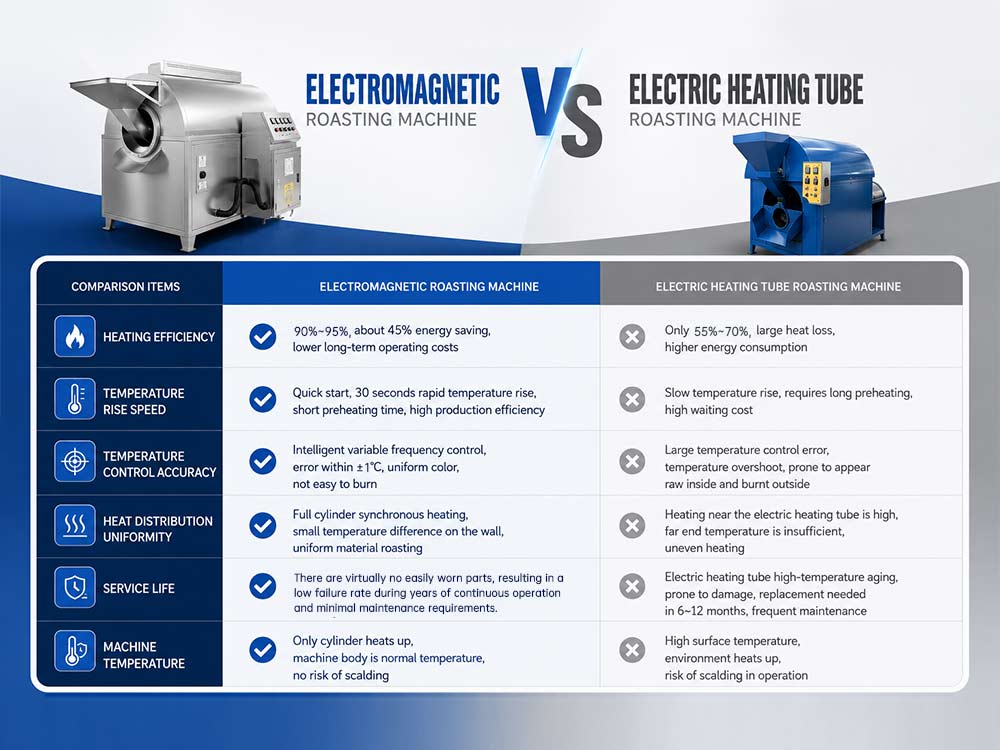
I. Core Heating Principle (Fundamental Difference)
1. Electromagnetic Nut Roasting Machine
Utilizes electromagnetic induction; an alternating magnetic field causes the drum itself to generate eddy currents and heat up directly. Heat is produced within the metal of the drum—a form of direct heating with no intermediate heat-transfer stage.
2. Electric Heating-Tube (Resistive Heating) Nut Roasting Machine
An internal resistance wire heats up when powered, transferring heat first to the air or a heat-conducting layer, and then gradually to the drum's outer wall. This is indirect conduction heating; heat passes through multiple layers, resulting in significant energy loss.
II. Key Performance Comparison
1. Energy Consumption and Heating Speed
- Electromagnetic Nut Roasting Machine: Thermal efficiency of 90%–95%; rapid temperature rise (within seconds of startup) and short preheating times. They consume 35%–45% less electricity than heating-tube models—a difference that becomes very significant in large-scale production.
- Heating-Tube Nut Roasting Machine: Thermal efficiency is only 55%–70%, with substantial heat loss to the air. Heating is slow, requiring long preheating periods before operation, and there is high power consumption during idle periods.
2. Temperature Control and Roasting Results
- Electromagnetic Nut Roaster: Temperature control precision of ±1°C with stable, fluctuation-free heat. The drum heats evenly across its entire surface, preventing issues like black beans being burnt on the outside yet raw on the inside. Consistency in doneness and color across batches makes them ideal for standardized production and export orders.
- Heating-Tube Nut Roaster: Significant temperature control variance and a tendency for localized overheating. Temperatures are excessively high near the heating tubes but insufficient at distant points; black beans may end up burnt on one side and raw on the other, leading to higher rejection rates.
3. Equipment Durability and Maintenance Costs
- Electromagnetic Nut Roaster Machine: No high-temperature resistive heating elements; the main coil does not come into contact with the hot product. There are virtually no easily worn parts, resulting in a low failure rate during years of continuous operation and minimal maintenance requirements.
- Heating-Tube Nut Roaster Machine: Heating tubes are consumable parts; prolonged exposure to high temperatures often causes them to burn out. Replacements are typically required every six months to a year, creating ongoing parts procurement costs. Dust and bean skins adhering to the tubes can further accelerate burnout.
4. Automation Compatibility
- Electromagnetic Nut Roasting Machine: Extremely fast heating response; the vessel temperature adjusts instantly to PLC heating/cooling commands. It integrates perfectly with fully automated recipe programs, automatically executing the entire process—preheating, roasting, holding, and discharging.
- Electric Heating Tube Nut Roasting Machine: High thermal inertia results in slow heating and cooling, causing significant temperature control lag. Actual temperatures often fail to keep pace with programmed settings, making automation difficult to implement; manual operation is usually required.
5. Workshop Environment
Electromagnetic heating targets only the vessel, keeping the machine casing cool and preventing the workshop from becoming stiflingly hot.
Electric heating tubes radiate significant heat outward, leading to high workshop temperatures in summer and a poor working environment.
6. Purchase Price
- Electromagnetic Models: Higher equipment cost; requires a larger initial investment.
- Electric Heating Tube Models: Lower unit price and entry barrier; offers better cost-performance for small shops or temporary use.
7. Material Compatibility Details
When roasting ingredients with skins (e.g., seeds, spices), exposed electric heating tubes can scorch loose skins, producing black smoke. Electromagnetic systems have no exposed high-temperature components, ensuring cleaner roasting for items like black sesame, black beans, and cumin without producing burnt residue or contaminants.
III. Recommended Use Cases
✅ Choose an Electromagnetic Roaster Machine for:
Factory-scale mass production; long-term, continuous roasting of black beans, grains, or nuts; applications requiring consistent quality and strict control over color and doneness; scenarios where high electricity costs make energy savings a priority; food exports or standardized contract manufacturing.
✅ Choose an Electric Heating Tube Roaster Machine for:
Small shops or market stalls with low daily output; limited budgets or short-term use; occasional roasting with short operating times; situations where long-term electricity and maintenance costs are not the primary concern.
If you are interested in roasting machines, please feel free to contact us! We are a professional manufacturer of electromagnetic roasting machines and offer customization based on your specific needs.
WhatsApp: +86 13863647232
Email: info@nut-roaster.com

